



















One of the staples of a Saint Stephen’s Episcopal School education is the unique opportunities our school offers. In addition to our Marine Science distinction, Visual Arts experiences, and Capstone projects, we have a global education program for students to participate in. This allows students to go on an Interim Quest (IQ) at the end of every year, participate in an international exchange trip to Spain, Argentina, Denmark, or Japan, and graduate with a Global Scholars distinction if they create a global portfolio.
However, our global education program wasn’t always as fleshed out as it is today. We came from humble beginnings, engaging in Skype calls with other schools around the globe.
Starting in 2007 and lasting for years after, our school had a mutual program with Lugalo Secondary School in Iringa, Tanzania. Our intermediate schoolers were able to converse with Tanzanian students, partaking in activities ranging from mutual art collaborations and creative writing critique, all through a virtual exchange that enabled them to learn about the culture while remaining at Saint Stephen’s.
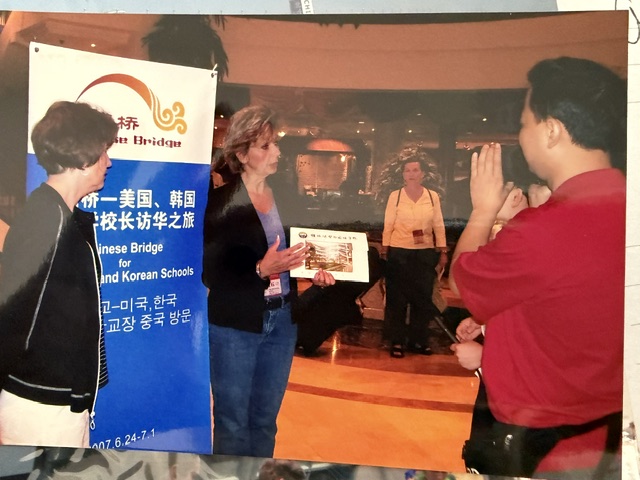
In the same year, our now-retired Head of School, Dr. Janet S. Pullen, was invited to China by the Hanban, a public Chinese institution meant to promote Chinese culture abroad. While there, she began a relationship with the Guilin Dezhi Foreign Language School through the Guest Teacher Program, forming a sistership that eventually led to a group of Saint Stephen’s students and families visiting Guilin, China in 2016.
Our program has continued expanding since, with many additional teachers taking the reins to continue growing global education at Saint Stephen’s.
“It’s the strength of a program that the people who are most involved today are not necessarily the people who started it in the first place,” explained Social Studies Department Chair Mr. Patrick Whelan.
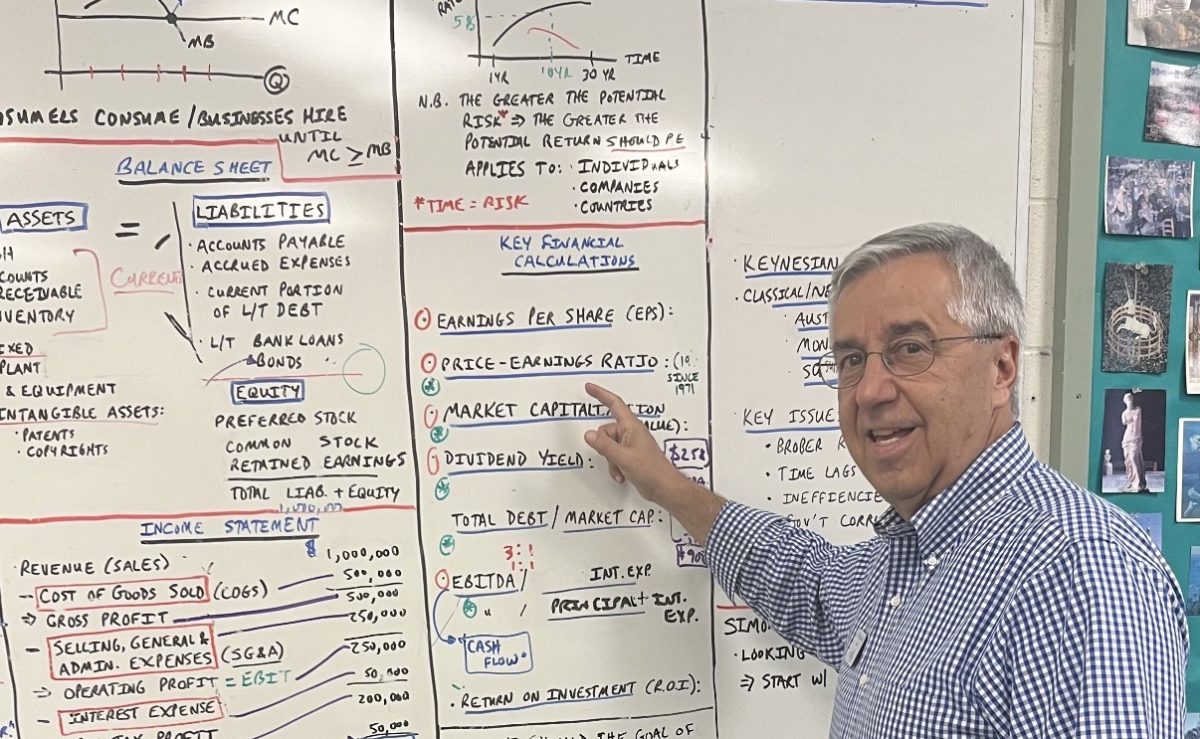
Many teachers have collaborated to integrate a global education focus into their classrooms. Mr. Bernie Yanelli runs our school’s Global Economics course, a distinctive course that only a few schools in the country offer.
Our Spanish classes have a pen pal exchange with our sister school I.E.S. Virgen del Soterraño in Barcarrota, Spain. In our history department, Mrs. Ligon Paleczny assigns a project for her Modern World History class that is supported closely by our exchanges with our sister school in Japan, allowing students to converse with Japanese students.
Global Education and Spanish Department Vice Chair Mrs. Jennifer Hambrick has also worked to expand global education through courses, exchange trips, and IQ week. In university, she participated in an exchange program to Mexico. The experience meant so much to her that she wanted to give the chance to travel globally to students at Saint Stephen’s.
“That experience was life changing for me, just knowing what learning side by side with a family from another culture … how transformative that is and what type of learning can take place,” she said. “I wanted to bring those opportunities to students here at Saint Stephen’s.”
Connections with other schools often start out with something as seemingly inconsequential as a conversation. While waiting for a bus at a teacher conference in Tokyo, Mrs. Hambrick spoke with another teacher from Denmark. Similarly, Mr. Whelan spoke with a teacher from Japan during a conference, leading to the blossoming relationship between us and our sister school Shibuya Junior & Senior High School.
Both of these are unities we still have today, and we regularly participate in annual exchanges with them.
“All of them have been kind of organic and natural,” Mrs. Hambrick said. “Connecting with different people, like-minded teachers, and educators in schools throughout the world is how we develop these [relations with] people who have a commitment to giving students these experiences and opening these conversations between countries and cultures.”
These unique beginnings also lead to unique opportunities for students to travel to countries they may not usually think of visiting.
“A lot of the schools [our sister schools] are in countries that aren’t on the tourist map,” said Mrs. Hambrick. “When you ask somebody, ‘where do you want to travel one day,’ you get the same set of destinations.”
In addition to opening those opportunities for our community to learn from other cultures they might typically not, the program also allows for students to experience daily life in another country. It lets them have a less touristy experience, instead learning valuable lessons about the culture while living with a host family.
Mrs. Hambrick and the Global Education Department are already working on upgrading the program for next year. They want to bring similar opportunities to IQ, increasing student access to learning from local communities while traveling.
“We are moving our international travel more towards the goals of global education,” Mr. Whelan said. “There will be some that take on issues of leadership, to become more ingrained within a community and immersed into a culture.”
Mrs. Hambrick hopes that more students who are interested in the exchange program decide to participate next year. The exchange program is a big step, with students opening their home and mindset to do something different, but she believes there is great value in it.
“My hope is that even more students step up and are like, ‘yeah, I want to give this try. I might be a little hesitant, but I’m ready for this challenge and experience of learning.’”